
Lifestyle
When Do Clocks Fall Back in 2026? Daylight Saving Time Guide

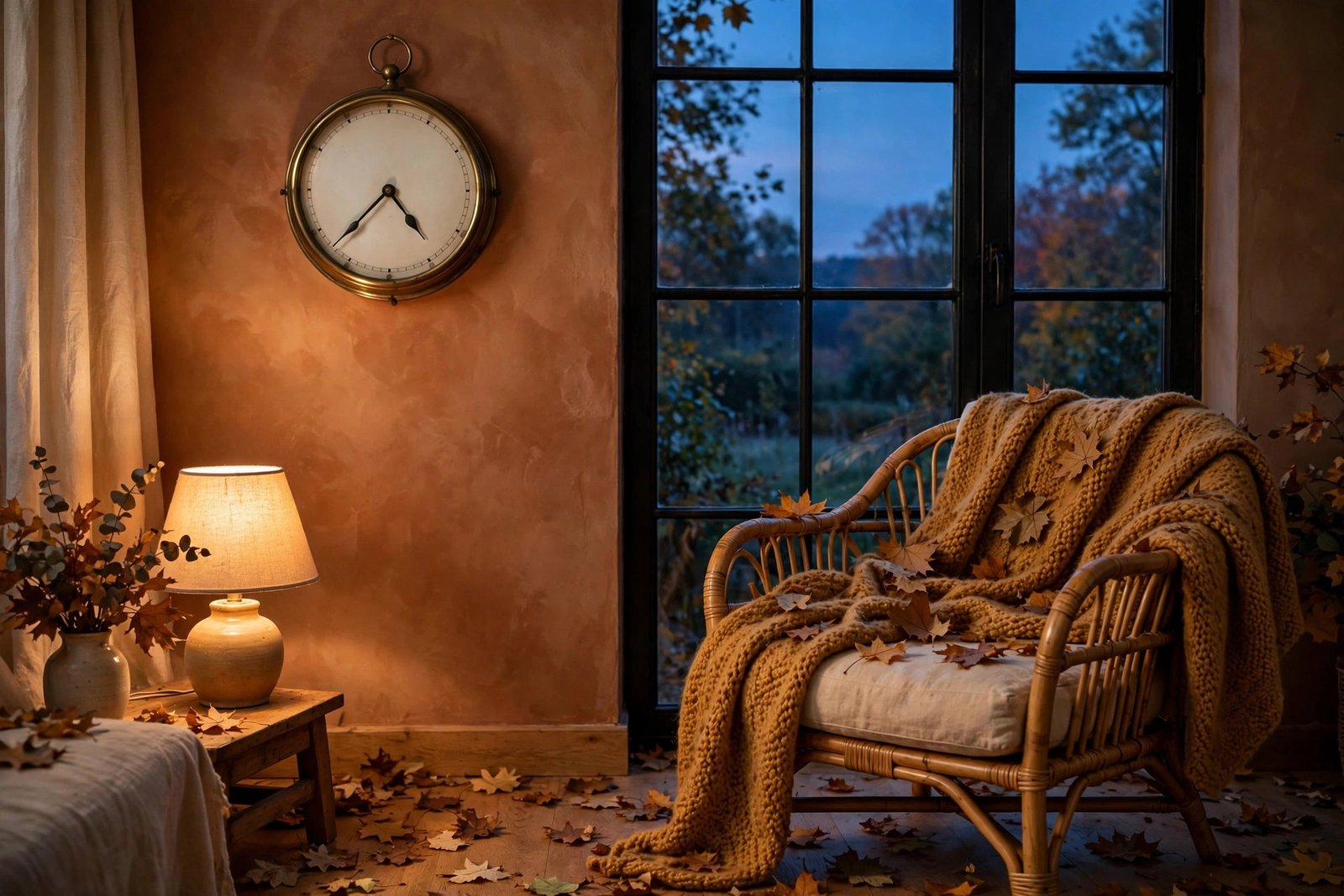
Clocks in the United States fall back on Sunday, November 1, 2026. At 2:00 a.m. local time, you set your clocks back one hour to 1:00 a.m. That gives most of the country an extra hour of sleep — and noticeably darker evenings from that Sunday on.
If you live in Hawaii or Arizona, nothing changes for you. Those two states do not observe daylight saving time, so their clocks stay right where they are.
When Do Clocks Fall Back in 2026?
Here is the exact schedule for the fall time change in 2026:
- Date: Sunday, November 1, 2026 — the first Sunday of November
- Time: 2:00 a.m. local time
- What happens: clocks move back one hour, from 2:00 a.m. to 1:00 a.m.
- Result: you gain an hour
The easiest way to handle it is to set your clocks back before bed on Saturday night, October 31. Most phones, computers, and other connected devices will update on their own. Anything with a manual clock — the microwave, the car dashboard, a wall clock — needs to be changed by hand.
Daylight saving time in 2026 began earlier in the year, on Sunday, March 8, when clocks moved forward one hour. So by the time November 1 rolls around, the country will have spent about eight months on daylight saving time.
After the change, mornings get brighter and evenings get darker. Sunrise and sunset each shift about an hour earlier on the clock. That is the classic trade of “fall back”: you get more light in the morning and less of it in the evening.
Why Do We Fall Back? A Short History
The idea of shifting clocks with the seasons is older than you might think. Benjamin Franklin joked about it in a 1784 essay, suggesting that people could save on candles by waking up earlier in summer. The United States did not actually try it until World War I, when the Standard Time Act of 1918 introduced daylight saving time as a way to save energy. It was unpopular and repealed a year later.
The country tried it again during World War II, keeping clocks advanced year-round in a period called “War Time.” After the war, each state and city went its own way — which made train schedules and TV listings a mess. To fix that, Congress passed the Uniform Time Act in 1966, which set common start and end dates for daylight saving time across the country.
The dates we use today come from the Energy Policy Act of 2005, which took effect in 2007: daylight saving time now runs from the second Sunday in March to the first Sunday in November.
It is worth knowing that the U.S. has already tried ending the clock changes once — and it did not last. In 1974, during the oil crisis, Congress put the country on year-round daylight saving time as a two-year experiment to save energy. Within months, parents and schools were upset about children waiting for school buses in pitch-dark winter mornings. Congress repealed the experiment in October 1974, before it had even run a full year.
Which States Do Not Observe Daylight Saving Time?
Most of the country changes its clocks twice a year, but a few places do not:
- Hawaii — stays on standard time all year. Being close to the equator, its days are about the same length year-round, so shifting the clock would not change much.
- Arizona — stays on standard time all year, except the Navajo Nation, which does observe daylight saving time to stay in sync with its land in neighboring states. (The Hopi Reservation, which sits inside Navajo land, does not observe it — making Arizona’s northeast corner a real time-zone puzzle.)
Five U.S. territories also skip the change: Puerto Rico, the U.S. Virgin Islands, Guam, American Samoa, and the Northern Mariana Islands.
Why is Arizona the odd one out? Heat. In a desert state where summer days regularly pass 100°F, an extra hour of evening sunlight means more air conditioning, not less energy use. Arizona opted out back in 1968. The Uniform Time Act allows states to exempt themselves and stay on standard time year-round — but it does not allow them to stay on daylight saving time permanently without federal approval.
Is Daylight Saving Time Going Away? The Sunshine Protection Act
Every fall, people ask whether this will be the last time we have to change the clocks. Here is where things stand as of October 2026.
The Sunshine Protection Act is a federal bill that would make daylight saving time permanent across the country — no more springing forward or falling back. It was first introduced by Senator Marco Rubio in 2018. In 2022, the Senate passed it by unanimous consent, but the House never took it up and the bill died at the end of that year.
The bill came back in 2025, introduced in the House by Representative Vern Buchanan of Florida as H.R. 139. This time it got further: the House passed it on July 14, 2026, by a vote of 308 to 117, and President Donald Trump has publicly backed it. But the Senate has not acted. The bill is sitting in the Senate Committee on Commerce, Science, and Transportation with no floor vote scheduled, and some senators — including Tom Cotton of Arkansas — have opposed it.
Sleep doctors have also pushed back. The American Academy of Sleep Medicine argues that permanent daylight saving time would throw body clocks out of sync, since our biology is tuned to morning light. Major medical groups actually favor permanent standard time instead. A competing bill, the Sunshine for Our Kids Act, proposes exactly that.
Meanwhile, 19 states have passed their own year-round daylight saving laws — but those laws cannot take effect, because federal law does not allow it. They sit dormant, waiting on Congress.
The bottom line: as of October 2026, the Sunshine Protection Act is not law. The twice-yearly clock changes remain in place, and clocks will fall back on November 1, 2026 as scheduled. If the Senate ever passes the House version unchanged, it would go to the president’s desk — but that has not happened.
What to Do Before the Time Change
The fall change is the easy one — you gain an hour. Still, a little preparation helps:
- Change manual clocks on Saturday night so you wake up on the right time Sunday morning.
- Check your smoke and carbon monoxide detectors. Fire departments have long used the clock change as a reminder to test alarms and swap batteries.
- Plan for darker evenings. The sunset on November 1 will feel sudden — many places will see it around 5 p.m. If you commute, it is a good time to check that outdoor lights and bike or car lights are working.
- Enjoy the extra hour. That extra hour of sleep is real. Go to bed at your normal time and wake up an hour “early” by the clock.
Fall Back 2026 FAQ
Do I gain or lose an hour when clocks fall back?
You gain an hour. At 2:00 a.m. on November 1, 2026, clocks go back to 1:00 a.m. That is the opposite of the spring change, when you lose an hour.
Is 2026 the last time we change the clocks?
Probably not. The Sunshine Protection Act passed the House in July 2026 but is stalled in the Senate and has not been signed into law. Unless Congress acts and the president signs it, the clock changes continue — so plan on falling back again in November 2027.
Why doesn’t Arizona observe daylight saving time?
Because of the heat. Arizona’s leaders decided in 1968 that an extra hour of evening sunlight in summer would drive up air conditioning use rather than save energy. The state has stayed on Mountain Standard Time year-round ever since.
Will my phone change the time automatically?
Yes, in almost every case. Smartphones, computers, tablets, and smart watches update themselves based on your location. Only manual clocks — ovens, microwaves, car clocks, and old alarm clocks — need to be changed by hand.

What Is Disability Insurance? A Simple Guide

Droven.io: What It Really Is, an Honest Review (2026)

My Little Babog Blog: Family Lifestyle & Travel Guide (2026)

Empower Your SEO and Design with Seotoolsgroupbuy.us’ Designer Plan

Sejda PDF Editor Review: Features, Pricing & Best Alternatives
