
Tech
Do Robot Vacuums Work on Carpet? The Honest Answer

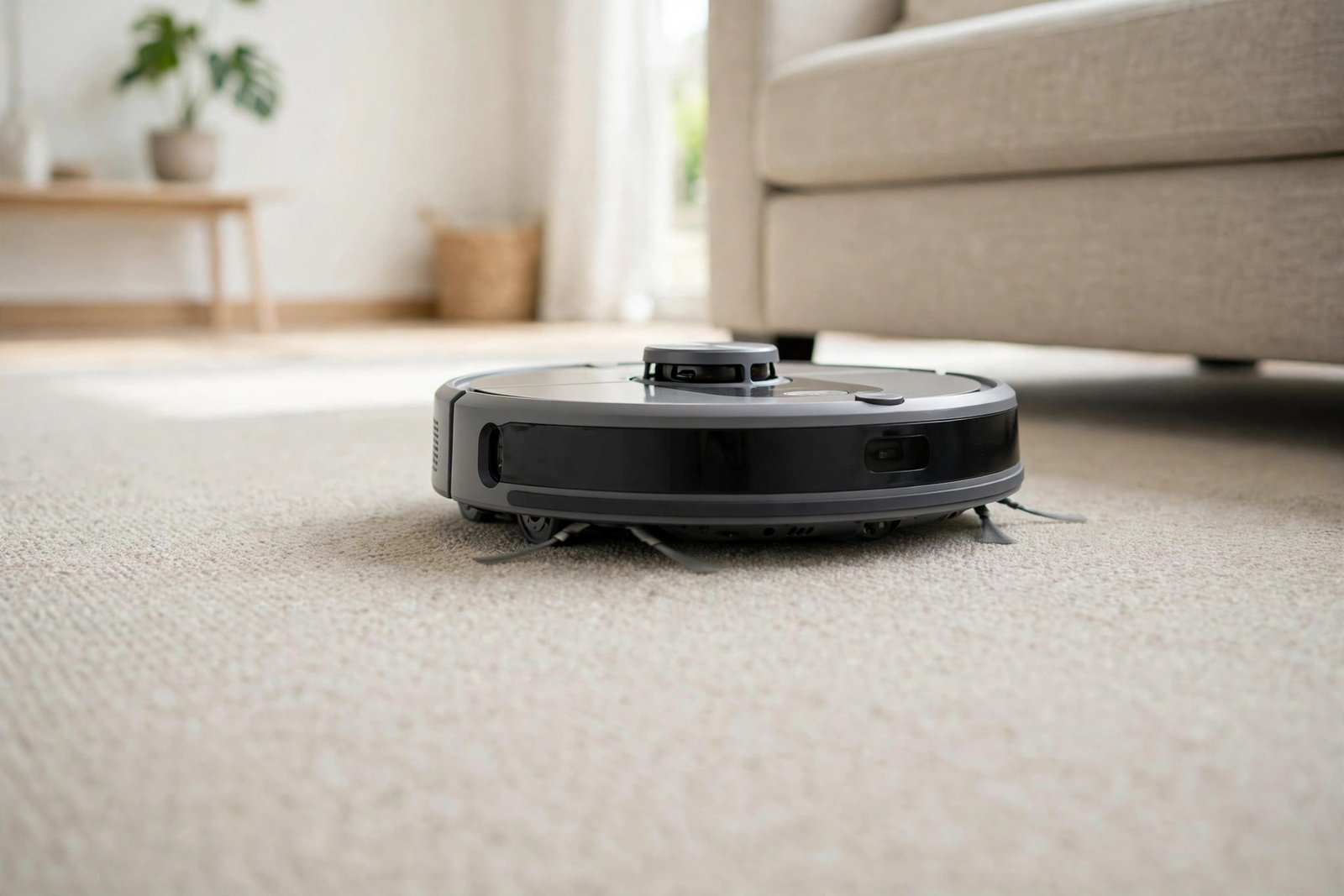
Yes, robot vacuums work on carpet — and modern ones do it far better than the early models did. Most homes have at least some carpet, so this is the first question most buyers ask. The honest answer is that a robot vacuum will keep low and medium-pile carpet clean day to day, handle pet hair well, and move between hard floors and rugs on its own. But it will not deep-clean thick carpet the way a full-size vacuum does, and very thick or shaggy rugs can still give it trouble.
Here is how it works in practice, which carpet types are easy, which ones are a struggle, and what to look for if carpet is your main concern.
The Short Answer: Yes, With a Few Limits
A robot vacuum cleans carpet with the same tools it uses everywhere else: suction, a spinning brush roll, and sensors that tell it where the floor changes. On carpet, the brush roll agitates the fibres to loosen dust and hair, and the suction pulls it into the dustbin. Better models also detect carpet and turn the suction up automatically.
Where it works well:
- Low-pile carpet: the easiest surface after hard floors. Everyday dust, crumbs, and pet hair come up without trouble.
- Medium-pile carpet: still fine for most modern robots with decent suction.
- Area rugs on hard floors: most robots climb onto thin rugs and clean them as part of the normal route.
Where it struggles:
- High-pile and plush carpet: dirt settles deep in the fibres, and the robot has to push through more resistance.
- Shag rugs: long fibres can wrap around the brush or confuse the navigation.
- Very dark rugs: older models can mistake a dark rug for a drop-off and refuse to cross it.
How Robot Vacuums Clean Carpet
Three things decide how well a robot vacuum does on carpet: suction, the brush, and carpet detection.
Suction power, measured in pascals
Suction is usually listed in pascals (Pa). The higher the number, the harder the vacuum pulls dirt out of carpet fibres. Budget models sit around 2,000–3,000 Pa, while current mid-range and premium models reach 8,000 Pa and beyond — some flagship models now advertise up to 30,000 Pa. For carpet, look for at least 8,000 Pa. Suction alone is not everything, though: brush design and airflow matter just as much, so a well-built 8,000 Pa robot can beat a poorly designed 15,000 Pa one.
The brush roll
The brush roll is what loosens dirt trapped between carpet fibres so the suction can pick it up. There are two common types:
- Rubber brushes: two rubber rollers that stay in close contact with the carpet. They are the better pick for pet hair because hair is far less likely to wrap around them.
- Bristle brushes: traditional brushes that can dig deeper into dense carpet, but they collect hair and fibres faster and need cleaning more often.
If you have pets, a rubber or anti-tangle brush is worth more than a slightly higher suction number.
Carpet detection and auto-boost
Many modern robots can tell when they roll from a hard floor onto carpet and boost suction automatically, then drop back down on hard floors to save battery. Robot vacuum mops do the same trick in reverse: they lift the mop pad when they detect carpet so they do not drag a wet pad across it. If you have mixed floors, this feature matters a lot.
How Well Do Robot Vacuums Work on Each Carpet Type?
| Carpet type | How a robot vacuum does | What helps |
|---|---|---|
| Low-pile (under about 10 mm) | Very good. Most robots clean it almost as well as hard floors. | Any decent modern model. |
| Medium-pile | Good. Daily dirt and pet hair come up fine. | Suction of 8,000 Pa or more, carpet boost. |
| High-pile / plush (10–20 mm or more) | Fair. Surface dirt comes up, but dirt deep in the fibres often stays. | Strong suction, around 20 mm of ground clearance, rubber brush. |
| Shag rugs | Poor to fair. Long fibres can tangle the brush or stop the robot. | Anti-tangle brush, high clearance — or clean shag with a full-size vacuum. |
| Dark-coloured carpet | Usually fine on newer models; older ones may avoid it. | A model with LiDAR or camera navigation instead of old infrared cliff sensors. |
One thing worth knowing: independent testing site Vacuum Wars found that the best modern robots pick up far more dirt from deep carpet than models from just a few years ago. The gap between a cheap random-navigation robot and a good mapping robot is bigger on carpet than on hard floors.
Can Robot Vacuums Go From Hard Floors to Carpet?
Yes. Modern robots are built to move between floor types without help. They roll from tile or wood onto a rug, boost suction, and keep cleaning in neat rows. Most can climb a small step of up to about 20 mm, which covers thin rugs and the edge of most carpets.
Problems usually come from the rug itself, not the robot. Raised edges, thick anti-slip underlays, and loose fringe are the most common reasons a robot gets stuck. A few simple fixes help: flatten rug edges with rug tape, tuck fringe underneath before a run, and remove a thick underlay if the robot keeps catching on it.
Robot Vacuums and Pet Hair on Carpet
Pet hair is where robot vacuums earn their keep on carpet — and also where the differences between models show up most.
- Daily hair: a robot run every day or two keeps pet hair from building up in carpet fibres, which is the real win. Hair that sits for a week is much harder to lift.
- Brush choice matters: rubber anti-tangle brushes handle pet hair far better than bristle brushes, which need hair cut off them regularly.
- Dustbin size matters too: carpet holds more dust and hair than hard floors, so the bin fills faster. A self-emptying dock is genuinely useful in a pet home with carpet.
- Filters: a HEPA-level filter traps fine dust and dander instead of blowing it back into the room.
Even so, a robot vacuum is a maintenance tool for pet hair, not a deep cleaner. A full-size vacuum once a week or so still does the heavy lifting on thick carpet.
What Robot Vacuums Can’t Do on Carpet
Being honest about the limits helps you decide whether one is worth it for your home:
- Deep cleaning: no robot vacuum digs into carpet as well as a full-size upright. If you only vacuum once a month, a robot will not catch up on its own.
- Stairs: robots cannot climb stairs, so carpeted stairs still need a regular vacuum or a handheld.
- Wet messes and stains: a robot vacuum cannot shampoo carpet or remove stains. Some robot mops can spot-clean hard floors, but they do not deep-clean carpet.
- Edges and corners: round robots leave a small strip along baseboards and in corners that a regular vacuum reaches easily.
- Very thick rugs: if the pile is taller than the robot’s ground clearance, it may drag, slow down, or avoid the rug altogether.
How to Get the Best Results on Carpet
A few habits make a big difference:
- Run it often. Two or three short runs a week beat one long run. Dirt that is picked up daily never gets a chance to settle deep into the fibres.
- Empty the bin and clean the brush. On carpet the bin fills fast, and a clogged brush cleans nothing. Check both once a week.
- Use carpet boost. If your robot has a carpet boost or max-suction mode, turn it on for carpeted rooms.
- Tidy the floor first. Cables, socks, and rug fringe are the main causes of a robot stopping halfway through a run.
- Set no-go zones for problem rugs. If a shag rug always traps the robot, mark it as a no-go zone in the app and clean it by hand.
- Keep a full-size vacuum for deep cleans. Run it over carpeted rooms every week or two, and let the robot handle the days in between.
What to Look For If You Buy a Robot Vacuum for Carpet
If carpet is your main floor type, check these before you buy:
- Suction of 8,000 Pa or more — enough to lift dirt out of the pile, not just off the surface.
- Automatic carpet detection — boosts suction on carpet and lifts the mop pad if it mops.
- Rubber, anti-tangle brush — especially important with pets or long hair in the house.
- Ground clearance around 20 mm — so it can move across thicker carpet without dragging.
- Mapping and no-go zones — lets you send it to carpeted rooms, skip problem rugs, and clean room by room.
- Large dustbin or self-emptying dock — carpet fills a small bin quickly.
- HEPA-level filtration — traps fine dust and allergens that carpet holds onto.
Do not buy on suction alone. A robot with strong suction but a weak brush and no carpet detection will lose to a balanced model with a lower Pa number.
The Bottom Line
Do robot vacuums work on carpet? Yes — on low and medium-pile carpet they work very well as a daily cleaning tool, and on high-pile carpet they do a decent job of surface cleaning. They are at their best when run often, and they are not a full replacement for a regular vacuum on thick carpet, stairs, or deep cleans.
If your home is mostly carpet, buy for carpet: strong suction, carpet detection, a rubber anti-tangle brush, and enough clearance. If you already own a robot vacuum, the tips above will get noticeably more out of it on carpet. To understand the machine itself, start with what a robot vacuum is and how a robot vacuum works.
Frequently Asked Questions
Can you put a robot vacuum on carpet?
Yes. Most modern robot vacuums are designed for carpet as well as hard floors. Low-pile carpet is no problem at all, and thicker carpet just needs a stronger model with carpet detection and enough ground clearance.
Do robot vacuums work on thick carpet?
They work, but not as well as on thin carpet. High-pile and plush carpet need strong suction (8,000 Pa or more) and around 20 mm of clearance, and even then a robot will not deep-clean the fibres the way a full-size vacuum does.
Do robot vacuums work on dark carpet?
Usually, yes — on newer models. Older robots with infrared cliff sensors can mistake a dark rug for a drop-off and refuse to cross it. Models with LiDAR or camera navigation handle dark carpet far better.
Can a robot vacuum replace a regular vacuum on carpet?
Not completely. A robot vacuum is excellent for keeping carpet clean day to day, but for deep cleaning thick carpet, stairs, and edges you still need a full-size vacuum every week or two.
How often should you run a robot vacuum on carpet?
Two to three times a week is a good baseline, and daily if you have pets. Frequent short runs keep dirt from settling deep into the fibres, which is where robots struggle most.







Dane Cook’s Brother: What Happened to Darryl McCauley

Do Robot Vacuums Work on Carpet? The Honest Answer

What Are IGF Games? The Independent Games Festival Explained

Empower Your SEO and Design with Seotoolsgroupbuy.us’ Designer Plan

Twstalker Twitter Web Viewer: Guide to Anonymous Twitter Browsing
