
Tech
Smartwatch vs Fitness Tracker: Which One Should You Buy in 2026?

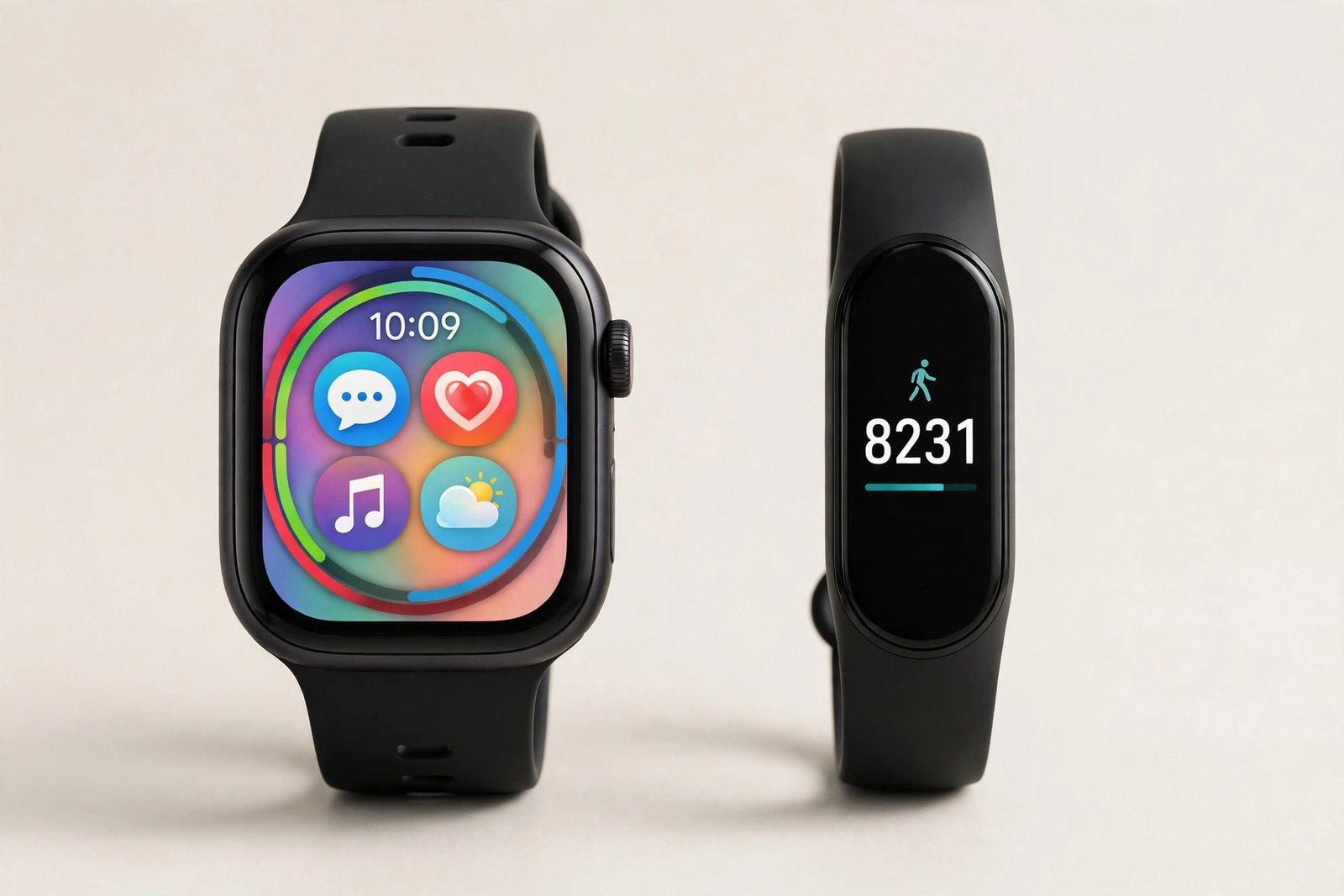
Shopping for a wearable and stuck between a smartwatch and a fitness tracker? They look similar on the wrist, but they are built for different jobs. A smartwatch is a small computer for your wrist. A fitness tracker is a focused health tool that quietly counts your steps, workouts, and sleep.
Here is the short answer: buy a smartwatch if you want apps, calls, messages, and payments from your wrist. Buy a fitness tracker if you mainly want health tracking, a lighter device, and a battery that lasts days instead of hours. The rest of this guide breaks down price, battery life, features, and comfort so you can pick with confidence.
Smartwatch vs Fitness Tracker at a Glance
| Feature | Smartwatch | Fitness Tracker |
|---|---|---|
| Typical price (US, October 2026) | $200 to $800+ | $50 to $200 |
| Battery life | About 1–2 days (Apple Watch SE 3: up to 18 hours) | 5–14 days (Fitbit Charge 6: up to 7 days) |
| Main job | Apps, calls, texts, payments, navigation, health | Steps, workouts, heart rate, sleep |
| Display | Large, bright touchscreen | Small, simple display (some have no screen at all) |
| Weight and comfort | Heavier, feels like a gadget | Light and slim, easy to forget you are wearing it |
| Best for | Staying connected without your phone | Building healthy habits with less distraction |
What Is the Real Difference?
A fitness tracker does a few things and does them well. It counts your steps, tracks your workouts, measures your heart rate, and records your sleep. You check the details in a companion app on your phone. That is mostly it — and for many people, that is exactly enough.
A smartwatch does all of that too, then adds a lot more: you can answer calls, reply to messages, use apps, pay at the checkout, get directions, and control your music, all from your wrist. If you are still deciding what a smartwatch even is, our plain-English guide What Is a Smartwatch? Explained in Simple Terms covers the basics.
Price: Trackers Win on Value
Price is where the gap is biggest. Good fitness trackers start around $50 and top out near $200 — the Fitbit Charge 6, one of the most popular trackers, costs $159.95. Smartwatches start around $200: the Apple Watch SE 3 starts at $249, and premium models like the Apple Watch Ultra line go past $799. Prices checked October 2026.
The rule of thumb: under $100, a fitness tracker almost always gives you better value. Between $100 and $250, you are choosing between a top-end tracker and an entry-level smartwatch. Above $250, you are firmly in smartwatch territory.
Battery Life: The Dealbreaker
Battery life is the one difference you will feel every single day. Most smartwatches need charging every night — the Apple Watch SE 3 is rated for up to 18 hours of normal use, stretching to 32 hours in Low Power Mode. Most fitness trackers run for a week or more on one charge, so you can wear them day and night without thinking about a charger.
That matters most for sleep tracking. A tracker stays on your wrist overnight without fail. A smartwatch often needs to be on its charger at night, which is exactly when you would want it tracking your sleep. If you want reliable sleep data, see our guide on how to track sleep on a smartwatch — and note that a tracker makes the whole thing simpler.
Features: Smartwatches Do More, Trackers Distract Less
Smartwatches win on features, no contest. Calls, texts, apps, contactless payments, maps, voice assistants, fall detection, and ECG readings on many models — a smartwatch can replace your phone for small tasks all day long.
But more features also mean more interruptions. Every notification buzzes on your wrist. A fitness tracker, by contrast, mostly leaves you alone. It shows your stats and a few basic notifications, and that is it. For workouts, school, or just a quieter day, that simplicity is a genuine advantage, not a missing feature.
One more practical point: a smartwatch is usually tied to your phone’s ecosystem — an Apple Watch needs an iPhone, for example. Fitness trackers generally work with both iPhone and Android. If you are unsure whether a watch even needs a phone nearby, read Do Smartwatches Work Without a Phone? The Honest Answer.
Health Tracking: Closer Than You Think
For basic health data — steps, heart rate, sleep, workouts — a good tracker matches a smartwatch. Step counts across brands land within a few percent of each other, and sleep tracking is decent on both. Where smartwatches pull ahead is depth: ECG readings, fall detection, skin temperature, and safety alerts that can call for help.
So if your goal is simply to move more and sleep better, a tracker is plenty. If you want advanced health alerts and safety features, a smartwatch earns its higher price.
Comfort: Trackers Are Easier to Live With
Fitness trackers are slim, light bands — most weigh 15 to 30 grams. You can sleep, shower, and work out in them without noticing. Smartwatches are bigger and heavier, typically 30 grams and up, with a larger screen that can feel bulky at night or during workouts. For 24/7 wear, trackers usually win.
Which Is Better for You?
Choose a fitness tracker if you:
- Mainly want steps, workouts, heart rate, and sleep tracking
- Want a battery that lasts a week or more
- Prefer a light, comfortable band you can wear day and night
- Have a budget under $200
- Want fewer notifications and distractions
Choose a smartwatch if you:
- Want calls, texts, apps, and payments from your wrist
- Want advanced health features like ECG and fall detection
- Are happy charging every night
- Want a device that can partly replace your phone
- Use an iPhone or Android phone and want the full ecosystem experience
The Bottom Line
There is no single winner — there is only the right fit for your habits. A fitness tracker is the smarter buy if health tracking is your main goal and you value battery life, comfort, and price. A smartwatch is worth the extra money if you want a connected mini-phone on your wrist. Buy for what you will actually use every day, not for the longest feature list.



How Does a Smartwatch Work? Explained in Simple Terms

Smartwatch vs Fitness Tracker: Which One Should You Buy in 2026?

7 Best Smartwatches for Beginners in 2026: Simple Picks for Every Phone

Empower Your SEO and Design with Seotoolsgroupbuy.us’ Designer Plan

Twstalker Twitter Web Viewer: Guide to Anonymous Twitter Browsing
