
Tech
What Is a Smartwatch? Explained in Simple Terms

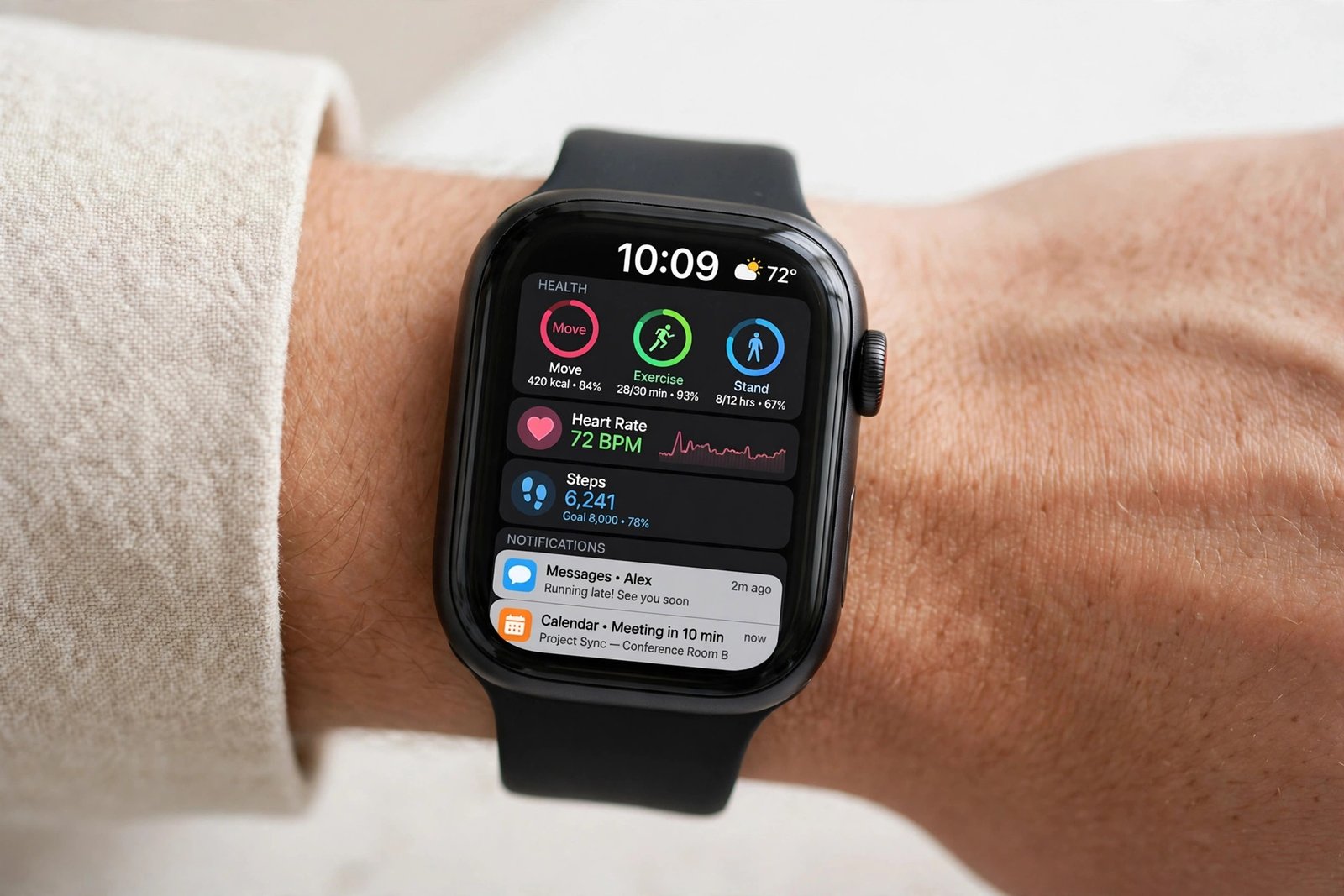
A smartwatch is a small computer you wear on your wrist. It looks like a regular watch, but it does a lot more than tell the time. It connects to your phone, shows your messages and calls, tracks your steps and workouts, and even keeps an eye on your heart rate — all from your wrist.
If you have ever wondered whether a smartwatch is just a fancy gadget or something genuinely useful, this guide explains it in plain terms: what it is, how it works, what it can do, and whether you actually need one.
Quick Answer: What Is a Smartwatch?
A smartwatch is a wearable device that looks like a wristwatch but runs apps, connects to your smartphone, and tracks health and fitness. Most modern smartwatches have a touchscreen, Bluetooth and Wi-Fi, and sensors that measure things like heart rate, steps, and sleep. Some can even make calls and pay for things on their own.
What Exactly Is a Smartwatch?
At its core, a smartwatch is a tiny smartphone for your wrist. Inside that small case you will find a processor, memory, a rechargeable battery, a touchscreen display, and a set of sensors. It runs its own operating system — Apple watches run watchOS, while most Android-compatible watches run Google’s Wear OS or Samsung’s One UI Watch.
Unlike a regular watch, a smartwatch is meant to work together with your phone. It pairs with your phone over Bluetooth, and your phone’s apps feed it information: incoming calls, text messages, emails, calendar reminders, and app notifications. That is why most smartwatches need a smartphone nearby to do their full job, though some models with their own cellular connection can work on their own.
What Can a Smartwatch Do?
Here are the things most modern smartwatches can handle:
- Notifications at a glance: See calls, texts, emails, and app alerts on your wrist without pulling your phone out of your pocket.
- Calls and messages: Answer calls, reply to texts with quick responses or voice dictation, and on cellular models, make calls without your phone nearby.
- Fitness tracking: Count steps, distance, calories burned, and workouts like running, cycling, and swimming.
- Health monitoring: Measure heart rate, track sleep, and on many models, estimate blood oxygen levels. Some can even take an ECG reading.
- Contactless payments: Pay at a store by holding your wrist near the card reader, using Apple Pay, Google Pay, or Samsung Pay.
- Music and podcasts: Control playback on your phone, or store songs on the watch itself and listen with wireless earbuds.
- Maps and navigation: Get turn-by-turn directions on your wrist, with GPS built into most models.
- Apps and watch faces: Install apps for weather, timers, alarms, and more, and change the watch face to match your style.
How Does a Smartwatch Work?
A smartwatch works in three simple parts: connection, sensors, and software.
1. Connection to your phone
Your watch talks to your phone over Bluetooth. When a message arrives on your phone, the phone sends it to the watch, which buzzes your wrist. When you reply from the watch, the message travels back through the phone. Wi-Fi and, on some models, a cellular connection let the watch stay connected even when your phone is not nearby.
2. Sensors that read your body
The most interesting part sits on the back of the watch. Small green LED lights shine into your skin, and a light sensor measures how much light bounces back. This is called photoplethysmography, or PPG. With every heartbeat, the amount of blood in the tiny vessels under your skin changes slightly, which changes how much light is reflected. The watch counts those changes and turns them into your heart rate in beats per minute.
Other sensors do other jobs: an accelerometer and gyroscope detect movement and count steps, GPS tracks where you run or cycle, and an altimeter measures elevation. Together, they build a picture of your activity and sleep.
3. Software that makes sense of it all
The watch’s operating system and companion app on your phone turn raw sensor data into things you can actually use: a daily step count, a sleep summary, a workout map, or a weekly fitness trend.
One honest note: smartwatch health readings are wellness estimates, not medical measurements. They are useful for spotting trends, but they are not a replacement for a doctor’s advice.
Smartwatch vs Fitness Tracker vs Regular Watch
These three often get mixed up, so here is the simple difference:
- Regular watch: Tells the time, and not much else. No apps, no notifications, no tracking.
- Fitness tracker: A slim band focused on steps, workouts, and sleep. It usually has a small screen and few or no apps.
- Smartwatch: Does everything a fitness tracker does, plus apps, notifications, calls, payments, and a full touchscreen. It is the most capable — and usually the most expensive — of the three.
If you only care about steps and sleep, a fitness tracker is cheaper and its battery lasts longer. If you want your phone’s most useful features on your wrist, a smartwatch is the better pick.
A Short History of the Smartwatch
The idea of a computer on your wrist is older than most people think. The first digital watch, the Pulsar, appeared in 1972. In 1998, Seiko released the Ruputer, a wristwatch computer with a tiny screen. Microsoft tried next with its SPOT watches in 2004, which received news and messages over FM radio.
The modern smartwatch era really began in 2012, when a small startup called Pebble raised over $10 million on Kickstarter for a watch that showed phone notifications. Google followed in 2014 with Android Wear, its operating system for watches. Then Apple launched the first Apple Watch in April 2015, and smartwatches went mainstream. Samsung, Garmin, Fitbit, and others have been building on that foundation ever since.
Do You Need a Smartwatch?
A smartwatch is worth it if you like the idea of checking messages without reaching for your phone, tracking workouts and sleep without extra gadgets, or leaving your phone behind on a run while still staying reachable. It is especially handy for people who get a lot of notifications or who train regularly.
It may not be worth it if you rarely wear a watch, dislike charging another device, or are happy checking your phone directly. Most smartwatches need charging every day or two, though some simpler models last a week or longer — that is worth checking before you buy.
Frequently Asked Questions
Do smartwatches work without a phone?
Mostly, yes, but with limits. A regular Bluetooth smartwatch can still tell the time, track workouts, and play stored music without your phone nearby. But notifications, calls, and messages need the phone connection, unless you buy a cellular model with its own mobile plan.
Can you make phone calls on a smartwatch?
Yes. Most smartwatches have a microphone and speaker, so you can answer calls from your wrist. Cellular models can make calls even when your phone is at home.
Are smartwatches waterproof?
Most are water resistant, not fully waterproof. Many can handle rain, sweat, and swimming, but the exact rating varies by model — check the manufacturer’s rating before taking one into the pool or sea.
How long does a smartwatch battery last?
It depends on the model. Most full-featured smartwatches last one to two days on a charge. Simpler watches and fitness-focused models can last a week or more.
The Bottom Line
A smartwatch is a wristwatch with a computer inside: it shows your notifications, tracks your fitness and health, and handles small tasks so you do not have to reach for your phone. It will not replace your phone, but for many people, it makes everyday life a little easier — one glance at the wrist at a time.

How to Track Sleep on a Smartwatch: A Simple Guide

Why Nvidia Stock Fell From Its Record High — and Why SpaceX Is Now in the Story

McDonald’s Pokémon Happy Meal Returns November 10, 2026: Toys, Cards, and What to Know

Empower Your SEO and Design with Seotoolsgroupbuy.us’ Designer Plan

Twstalker Twitter Web Viewer: Guide to Anonymous Twitter Browsing
