
Finance
What Is Disability Insurance? A Simple Guide

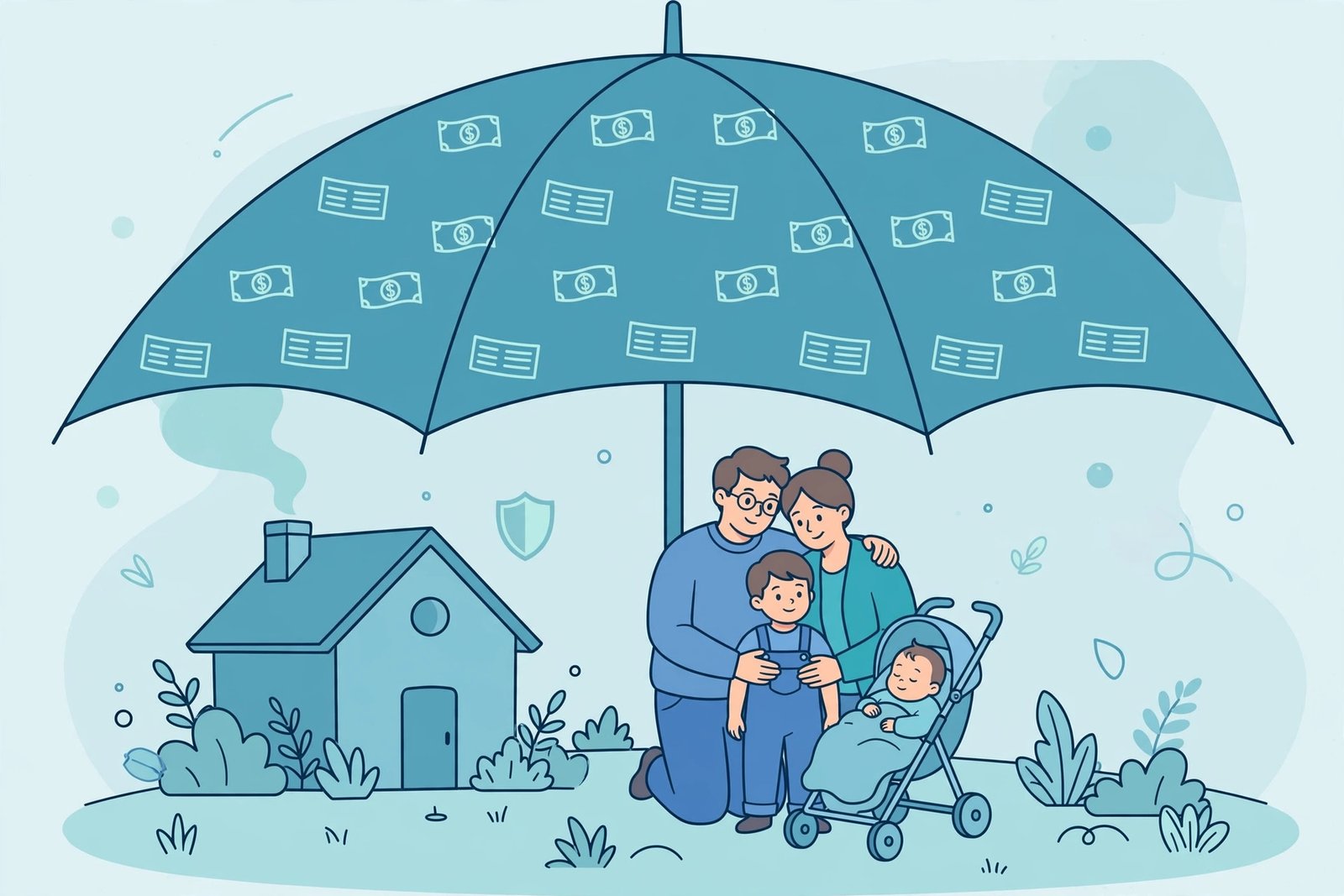
Quick answer: Disability insurance is a policy that pays you part of your income if an illness or injury stops you from working. It is not health insurance — health insurance pays your medical bills, while disability insurance pays you, so you can keep up with rent, groceries, and other bills while you recover. The two main kinds are short-term disability (covers weeks or months) and long-term disability (can cover years). The U.S. government also runs a program called Social Security Disability Insurance (SSDI), but it is much stricter and harder to qualify for.
What Is Disability Insurance?
Think of it as insurance for your paycheck. If you get hurt or sick and a doctor says you can’t work, disability insurance replaces a portion of your income — usually paid out weekly for short-term plans and monthly for long-term ones. You can spend the money however you need: medical copays, rent, utilities, groceries. It works like your normal income.
What surprises most people is how broad the coverage is. It isn’t just for dramatic accidents. Common reasons people file claims include back and joint problems, cancer treatment, mental health conditions like depression, injuries from falls or car accidents, and pregnancy complications — including time off when a doctor orders bed rest.
What it does not cover is also worth knowing: it doesn’t pay out if you lose your job, get laid off, or quit. The trigger has to be a medical condition that keeps you from doing your work.
Short-Term vs. Long-Term Disability Insurance
These are the two flavors of disability insurance, and they are built to work together — one covers the first stretch, the other picks up after that.
Short-term disability (STD) is for temporary situations: a surgery with a few months of recovery, a bad injury, a difficult pregnancy. Benefits usually start after a short waiting period — often 7 to 14 days — and typically replace about 60 to 80 percent of your pre-tax salary for up to three to six months.
Long-term disability (LTD) is for serious situations that keep you out of work much longer. It has a longer waiting period — commonly around 90 days, sometimes three to six months — which is why it pairs so well with a short-term plan. Once it starts, it usually pays around 60 percent of your income, and the payout period can last for years. Many policies pay for a set number of years (like 5 or 10); some keep paying until you reach retirement age, around 65 to 67.
The two most important terms to understand are the elimination period (the waiting period before benefits begin — longer waits mean lower premiums) and the benefit period (how long the checks keep coming).
Employer Coverage vs. Buying Your Own Policy
Most people first meet disability insurance at work. Many employers offer short-term disability, and some pay the full premium — which makes it free for you. That’s a great deal, but group plans have two real drawbacks.
First, you can’t take the coverage with you. Leave the job, and the policy stays behind. Second, there’s a tax angle: if your employer pays the premium, your benefits are usually taxable income, which shrinks what you actually receive. If you buy your own individual policy and pay the premiums yourself, the benefits come to you tax-free.
You can also get coverage through a trade association or professional group, or buy an individual policy directly from an insurer on the open market. An individual policy costs more than a subsidized work plan, but it’s portable and you can tailor it — for example, choosing “own-occupation” coverage, which pays if you can’t do your specific job, versus the weaker “any-occupation” version, which only pays if you can’t do any job you’re suited for.
What About SSDI (Social Security Disability Insurance)?
SSDI is the federal government’s disability program, run by the Social Security Administration. It works differently from private insurance in almost every way — and it’s the option many people wrongly assume will catch them.
The government’s definition of disability is strict. Under Social Security rules, you count as disabled only if you cannot do the work you did before, cannot adjust to other work because of your medical condition, and your condition has lasted or is expected to last at least a year (or result in death). There are no benefits for partial disability or short-term disability.
On top of that, SSDI is an earned benefit: you need enough work credits from jobs where you paid Social Security taxes. Most adults need 40 credits, with 20 of them earned in the 10 years before the disability began (younger workers can qualify with fewer). You also can’t be earning above a set monthly limit — in 2026, that’s $1,690 a month ($2,830 if you’re blind). Your payment depends on your lifetime earnings, not a flat amount, and the average monthly benefit is about $1,634. It is notoriously hard to qualify for: many first applications are denied, and the process can take months. People who do get approved become eligible for Medicare after 24 months of receiving benefits. (You can read the official details on the Social Security Administration’s disability page.)
The honest takeaway: don’t count on SSDI as your plan. Treat it as a last resort, not a safety net.
Who Needs Disability Insurance?
Short version: just about anyone who earns a living and depends on that income. A few people need it most:
- Sole earners and breadwinners — if your household runs on your paycheck, a disability doesn’t just hurt you, it hits everyone who depends on you.
- Self-employed people and freelancers — you don’t get a work plan, so an individual policy is your only backstop.
- Anyone without deep savings — an emergency fund covers a few months; a serious disability can last years. The average long-term disability claim runs close to three years.
The odds are higher than most people think: the Social Security Administration notes that roughly 1 in 4 of today’s 20-year-olds will become disabled before reaching retirement age. Most of those disabilities aren’t permanent catastrophes — they’re illnesses and injuries that keep someone out of work for months or years.
How Much Does Disability Insurance Cost?
For an individual policy, expect to pay roughly 1 to 3 percent of your annual salary in premiums. As a rough example, someone earning $100,000 a year might pay somewhere around $80 to $250 a month, depending on the details.
What moves the price up or down:
- Your age and health — younger, healthier applicants pay less.
- Your occupation — desk jobs cost less to insure than physically risky ones.
- Benefit amount and period — bigger monthly checks and longer payout periods cost more.
- Waiting period — a 90-day wait is standard; choosing a longer wait (say, 180 days) lowers the premium, but only if you have savings or short-term coverage to bridge the gap.
Through an employer, it’s often free or heavily subsidized — which is why signing up for a work plan, when it’s offered, is usually a no-brainer even if you later add your own policy on top.
FAQs
Is disability insurance worth it?
If you rely on your income to live — which is most of us — yes. Ask yourself whether your savings could cover your bills for six months, a year, or longer with zero income coming in. If the answer is no, this is the policy that fills that gap.
Does disability insurance cover pregnancy?
Often, yes. Doctor-ordered bed rest and pregnancy complications are common reasons for short-term disability claims. A normal, healthy pregnancy without complications usually isn’t covered on its own — check the policy wording.
Can I get disability insurance if I’m self-employed?
Yes. You won’t have an employer plan, but you can buy an individual policy from a private insurer. Apply while you’re healthy — pre-existing conditions can lead to exclusions or higher rates.
What’s the difference between “own-occupation” and “any-occupation”?
Own-occupation pays if you can’t perform the duties of your specific job, even if you could do other work. Any-occupation only pays if you can’t do any job you’re reasonably suited for — a much harder bar. Own-occupation costs more but protects specialists, tradespeople, and anyone whose income depends on specific skills.
How long does it take to get benefits?
For private policies, it depends on the elimination period: roughly 1–2 weeks for short-term plans and around 90 days for long-term ones. SSDI is a different story — the application process alone can take many months.
The Bottom Line
Disability insurance is simple at its core: it keeps money coming in when illness or injury stops you from earning it. Short-term coverage handles the first few months, long-term coverage protects you for years, an employer plan is a good start but usually isn’t enough on its own, and SSDI is strict, slow, and modest — not a plan to rely on.
Note: this article is general educational information, not financial or legal advice. Everyone’s situation is different, so talk to a licensed insurance professional or financial adviser before choosing a policy.

What Is Disability Insurance? A Simple Guide

Droven.io: What It Really Is, an Honest Review (2026)

My Little Babog Blog: Family Lifestyle & Travel Guide (2026)

Empower Your SEO and Design with Seotoolsgroupbuy.us’ Designer Plan

Sejda PDF Editor Review: Features, Pricing & Best Alternatives
